From Student Leader to Graduate Research Assistant: Mr Osama Radi Al Assme on Building Real-World AI Systems at UNIMY
By Devakumar A/L Robert William, Senior Executive, BAC College and Nevash Nithi, Content Writer, BAC College

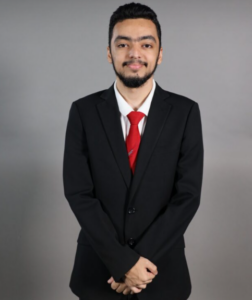
For some graduates, completing a degree is just the beginning of a new journey. For others, it means returning to familiar surroundings in a completely different role, with new responsibilities and opportunities to grow.
In this UNIMY Student Spotlight, we feature Mr Osama Radi Al Assme, who completed his Bachelor of Computer Engineering with Honours at UNIMY in February 2026. He is now a Graduate Research Assistant at the university while pursuing a full-time Master of Science in Engineering. A consistent Dean’s List achiever and former President of the Student Representative Council (SRC), Osama has balanced academic achievement with leadership and community involvement.
His current work covers AI, software development, cybersecurity and technical research. His Master’s research focuses on AI-driven anomaly detection and self-healing cybersecurity systems for IoT environments. Beyond his academic and technical work, he has also conducted around 28 digital literacy workshops for senior citizens.
We spoke with Osama about his transition from student to staff member, how UNIMY prepared him for the workplace, and the advice he has for students preparing to enter the technology industry.
1. Tell us a little about yourself. What programme did you complete at UNIMY, what is your current role, and what motivated you to pursue a full-time Master’s degree?
I completed my Bachelor of Computer Engineering with Honours at UNIMY in February 2026. I am currently pursuing my Master of Science in Engineering full-time while working as a Graduate Research Assistant (GRA) at the university. My role involves contributing to various projects and initiatives related to AI, software development, cybersecurity and technical research.
During my undergraduate studies, I developed a growing interest in AI, IoT and cybersecurity, particularly in how these technologies can solve real-world problems. I decided to continue my studies because I wanted to explore these areas in greater depth and build on the knowledge I had gained during my degree. My current research focuses on AI-driven anomaly detection and self-healing cybersecurity systems for IoT environments.
2. You moved from being a UNIMY student and IT intern to a Graduate Research Assistant at the university. What does your day-to-day work look like now?
My work today is quite different from when I first joined BAC Education as an IT intern. During my internship, I developed a Timetable Management System and supported daily IT operations.
As a GRA, I now assist UNIMY with various AI, software development and technical projects. One of these is BAC SmartSales AI, an internal assistant that helps the sales team retrieve programme information from approved documents. I have also developed university dashboards, laboratory monitoring tools and data automation systems.
Beyond software development, I contribute to initiatives such as the UNIMY–Infoline AI Hub and UNIMY’s Cybersecurity Laboratory. What I find most rewarding is seeing something I have developed move beyond the development stage and become a working system that people can use in their daily tasks.
3. For your individual final-year project, you worked on AI-Based Early Detection of BME280 Sensor Drift Using LSTM and TinyML. How are you building on this interest in your Master’s research and your work today?
My individual final-year project explored how machine learning could detect changes in sensor behaviour that might affect the reliability of IoT systems.
The project strengthened my interest in using AI to identify problems early. It also encouraged me to explore how intelligent systems could go beyond detecting problems and respond to them automatically.
I am continuing this work through my Master’s research, which focuses on developing an AI-driven anomaly detection and self-healing framework for cybersecurity in IoT environments. My involvement in university projects also allows me to apply AI and software development to a range of practical challenges.
4. How did your studies and activities at UNIMY prepare you for the workplace? Were there any technical tools, platforms or subjects that gave you a notable advantage?
One of the most valuable things I gained from UNIMY was the opportunity to apply classroom knowledge through practical projects.
Programming, networking, embedded systems and AI gave me the technical foundation I continue to use today. My final-year project also taught me the importance of independent research, troubleshooting and finding solutions when things do not work as expected.
Moving into a professional environment also taught me that technical knowledge is only one part of the job. Understanding what people need, communicating with different teams and finding ways to turn ideas into useful solutions are just as important.
5. You served as President of the Student Representative Council from 2023 to 2024. How has that leadership experience influenced the way you communicate, collaborate and work with teams?
Serving as President of the Student Representative Council from 2023 to 2024 was an important part of my university experience. It gave me the opportunity to represent students, coordinate activities and work with people from different backgrounds and with different expectations.
One of the most valuable lessons I learned was the importance of listening to different perspectives before making decisions. I also realised that leadership is not simply about giving instructions. It involves taking responsibility, communicating clearly and working with others towards a common goal.
These lessons have been useful when coordinating with university departments, management and industry partners on various projects and initiatives.
6. You have also taught digital literacy sessions for senior citizens. How did this help shape your ability to explain complex technologies to non-technical audiences?
I have conducted around 28 digital literacy workshops for senior citizens, covering topics such as AI tools, smartphones, online safety, NotebookLM and other digital applications.
Through these sessions, I learned that understanding a technology and explaining it to someone else are two different skills. Something that seems simple to us may be completely new to someone who has never used it before. This taught me to be more patient, avoid unnecessary technical terms and use practical examples that participants can understand and apply themselves.
I believe this is equally important when developing software. A system may have many advanced features, but its real value depends on whether people can understand and use it effectively.
7. Studying full-time for a Master’s degree while assisting the university as a GRA takes commitment and discipline. What are the biggest challenges of managing both, and how do you maintain a balance?
Balancing my full-time Master’s studies with my responsibilities as a GRA can be challenging, particularly when both require time and concentration. My university work often involves developing systems, troubleshooting technical issues and responding to practical requirements. My research, meanwhile, requires me to review existing studies, explore different approaches and develop my proposed framework.
I manage both by prioritising my responsibilities and making consistent progress. Although it can be demanding, I find that my work and research complement each other. The practical experience helps me better understand how the technologies I study can be applied to real-world situations.
I am also grateful to UNIMY for giving me the opportunity and support to continue my studies while contributing to the university. I would especially like to thank Mr. Thillai Raj T. Ramanathan (CTO, BAC Education), Dr. Nor Azlinah Md Lazam (Deputy Vice Chancellor University Malaysia of Computer Science and Engineering UNIMY), Mrs. Suhaila binti Abdul Rahman (Acting Head, Dean of Academic | Dean, School of AI and Computer Engineering (SoACE)) and Dr. Noor Azizah Atdenan (Registar) for their continued support, guidance and understanding. Their encouragement has helped me balance these responsibilities while continuing to grow academically and professionally.
8. What advice would you give to current UNIMY students preparing to enter the workforce, especially those who may be considering postgraduate studies? What key lesson from your journey would you like them to remember?
My advice to current UNIMY students is to make the most of the opportunities available during their university years. Do not limit yourself to completing assignments and preparing for examinations. Try building something of your own, taking part in activities, working with others and exploring areas that genuinely interest you.
Looking back, my experiences in student leadership, my final-year project, my internship and my involvement in university activities each taught me something different. Some helped me develop technical knowledge, while others strengthened my communication skills, confidence and ability to work with people.
For those considering postgraduate studies, I would encourage you to choose a research topic that genuinely interests you and understand why you want to pursue it. Research requires commitment, and having a real interest in the subject makes the journey more meaningful.
Most importantly, do not feel that you need to know everything before getting started. Many of the things I have learned came from taking on challenges that required me to explore something new.
Key Takeaways
· Turn theory into systems people can use: Classroom knowledge becomes more valuable when it is applied to build tools that solve real problems. Seeing your work become something people rely on is particularly rewarding.
· Technical skills are only part of the job: Understanding people’s needs, communicating with different teams and developing practical solutions are just as important as writing code.
· Explaining technology is a skill: Understanding a technology and teaching it to someone else are different things. Patience, simple language and practical examples help make complex ideas easier to understand.
· Listen before you lead: Good leadership means considering different perspectives, taking responsibility and communicating clearly.
· Build something of your own: Go beyond assignments and examinations. Personal projects, activities and teamwork help develop both technical and interpersonal skills.
· Choose research that interests you: Postgraduate research requires commitment. A genuine interest in your subject makes the effort more meaningful.
· Start before you feel ready: You do not need to know everything before taking the first step. Many valuable lessons come from tackling unfamiliar challenges.
The UNIMY Student Spotlight series shares the journeys, achievements and experiences of UNIMY students and graduates as they progress through their academic and professional lives. Through these stories, we aim to inspire and guide students as they prepare to enter the technology industry.